Introduction
Animals are an essential part of our world. They contribute to healthy ecosystems, provide companionship, assist humans in countless ways, and enrich our lives with their presence. Yet millions of animals around the globe continue to face neglect, abuse, habitat destruction, starvation, and abandonment.
Animal welfare is more than simply feeding pets or rescuing injured wildlife. It is a commitment to ensuring that every animal can live a healthy, safe, and dignified life. Governments, organizations, communities, and individuals all have a role to play.
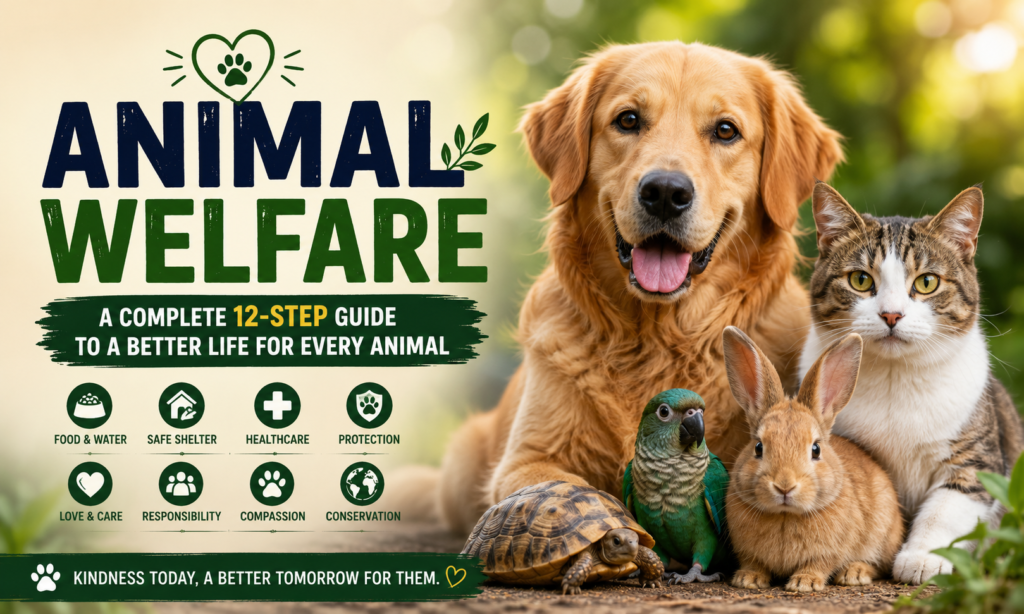
This comprehensive guide explores twelve practical steps that can help improve animal welfare and inspire positive action in our communities.
Step 1: Understand What Animal Welfare Really Means
Animal welfare focuses on the physical and mental well-being of animals. It ensures they are healthy, comfortable, properly nourished, safe, and free from unnecessary pain, fear, and distress.
Good welfare means providing animals with:
- Nutritious food
- Fresh drinking water
- Clean shelter
- Medical care
- Protection from cruelty
- Opportunities to express natural behaviors
Understanding these principles is the first step toward responsible animal care.
Step 2: Provide Proper Nutrition and Clean Water
Every animal deserves access to balanced nutrition and clean water every day.
Different species have different dietary requirements. Dogs, cats, birds, livestock, and wildlife all require specific nutrients to remain healthy.
Good nutrition helps:
- Strengthen immunity
- Improve growth and development
- Prevent diseases
- Increase lifespan
- Maintain healthy body weight
Fresh water should always be available, especially during hot weather.
Step 3: Ensure Safe and Comfortable Shelter
Shelter protects animals from extreme temperatures, rain, wind, predators, and disease.
An ideal shelter should provide:
- Protection from harsh weather
- Adequate ventilation
- Dry sleeping areas
- Clean surroundings
- Enough space for movement
Whether caring for pets, farm animals, or rescued animals, a safe environment significantly improves their quality of life.
Step 4: Schedule Regular Veterinary Care
Preventive healthcare is essential for every animal.
Routine veterinary visits help detect illnesses before they become serious.
Essential veterinary services include:
- Vaccinations
- Deworming
- Dental care
- Health check-ups
- Parasite control
- Emergency treatment
Early diagnosis often saves lives while reducing long-term medical costs.
Step 5: Prevent Animal Cruelty and Neglect
Cruelty can take many forms, including abandonment, physical abuse, starvation, illegal breeding, and neglect.
Signs that an animal may need help include:
- Visible injuries
- Severe weight loss
- Dirty living conditions
- Untreated illnesses
- Constant fear or aggression
If you suspect cruelty, contact local animal welfare organizations or authorities so trained professionals can investigate.
Step 6: Encourage Responsible Pet Ownership
Owning a pet is a lifelong commitment.
Responsible owners should:
- Feed pets properly
- Provide regular exercise
- Maintain vaccinations
- Offer emotional care
- Train pets using positive reinforcement
- Keep identification tags updated
Responsible ownership reduces abandonment and improves animal welfare across communities.
Step 7: Support Adoption Instead of Buying Pets
Animal shelters care for thousands of abandoned animals waiting for permanent homes.
Adopting offers several benefits:
- Saves lives
- Reduces overcrowded shelters
- Discourages unethical breeding
- Provides loving companions
- Supports rescue organizations
Choosing adoption gives deserving animals a second chance.
Step 8: Protect Wildlife and Natural Habitats
Wild animals depend on healthy ecosystems for survival.
Human activities such as deforestation, pollution, illegal hunting, and urban expansion threaten many species.
You can help by:
- Reducing plastic waste
- Planting native trees
- Supporting conservation projects
- Respecting protected areas
- Never purchasing illegal wildlife products
Healthy habitats benefit both wildlife and future generations.
Step 9: Promote Spaying and Neutering Programs
Uncontrolled breeding contributes to growing populations of stray animals.
Spaying and neutering help:
- Reduce homelessness
- Lower shelter overcrowding
- Prevent certain diseases
- Improve overall animal health
- Reduce aggressive behaviors
Community sterilization programs are among the most effective long-term animal welfare solutions.
Step 10: Educate Families and Communities
Awareness creates lasting change.
Schools, community organizations, and animal welfare groups can educate people about:
- Humane treatment
- Responsible pet ownership
- Wildlife conservation
- Disease prevention
- Animal safety
Teaching compassion at an early age encourages future generations to care for animals responsibly.
Step 11: Volunteer or Support Animal Welfare Organizations
Many nonprofit organizations rely on volunteers and donations to continue their work.
You can contribute by:
- Volunteering at shelters
- Donating supplies
- Sponsoring rescue animals
- Participating in awareness campaigns
- Sharing educational content
- Organizing community events
Even small contributions create meaningful impact.
Step 12: Inspire Others Through Everyday Actions
Positive change begins with individual actions.
Simple habits can make a significant difference:
- Be kind to stray animals.
- Drive carefully in areas with wildlife.
- Report injured animals.
- Reduce littering.
- Encourage humane treatment.
- Share reliable information about animal welfare.
- Support ethical businesses that value animal well-being.
When communities work together, animals receive the protection and respect they deserve.
Benefits of Strong Animal Welfare Practices
Investing in animal welfare benefits everyone.
Some key advantages include:
- Healthier communities
- Better public safety
- Reduced spread of diseases
- Stronger environmental conservation
- Greater compassion in society
- Improved biodiversity
- Enhanced human-animal relationships
Frequently Asked Questions
Why is animal welfare important?
Animal welfare ensures animals live healthy, safe, and comfortable lives while reducing unnecessary suffering.
How can I help stray animals?
Provide clean water when possible, support local rescue groups, report injured animals, and encourage sterilization programs.
Does adopting a pet help animal welfare?
Yes. Adoption reduces shelter overcrowding, saves lives, and discourages unethical breeding practices.
What is the role of veterinary care?
Regular veterinary care prevents disease, improves health, and helps animals live longer, healthier lives.
Conclusion
Animal welfare is a shared responsibility that extends beyond pet ownership. Every person has the power to make a difference through compassion, education, and responsible action. Whether you adopt a shelter animal, volunteer with a rescue organization, protect wildlife habitats, or simply encourage humane treatment in your community, your efforts contribute to a safer and healthier world for animals.
Together, we can create a future where every animal is treated with kindness, respect, and dignity. Every small action matters—and every life deserves care.
Animal Welfare
321 Example St.
San Francisco, CA